



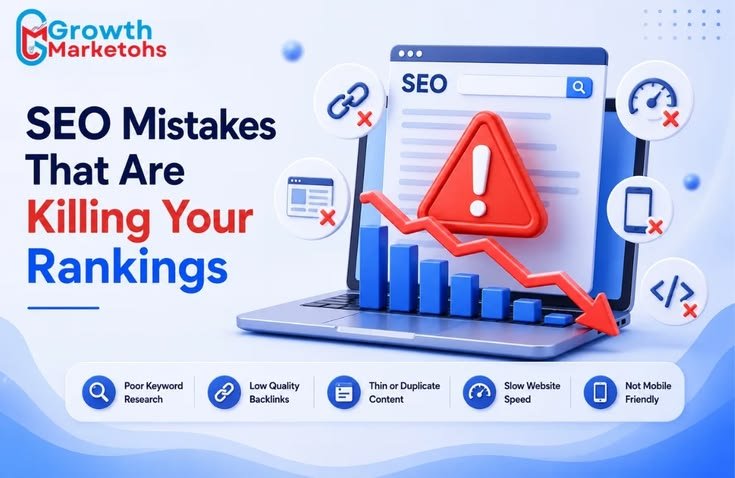
If your website isn’t showing up on Google the way you hoped, the problem might not be bad luck. Often, it’s a few small SEO mistakes quietly working against you. The good news is that most of these mistakes are easy to fix once you know what to look for. Let’s go through the 10 most common ones in simple, plain language.
SEO mistakes can significantly hurt your website’s visibility on Google and make it difficult to attract organic traffic. Many businesses unknowingly make common SEO mistakes that negatively impact their search rankings, website performance, and user experience. Understanding these mistakes and fixing them can help improve your Google rankings and drive more qualified visitors to your website.
In this guide, we’ll explore the top 10 SEO mistakes that hurt your Google rankings and explain how to fix them to improve your website’s visibility and performance.
10 SEO Mistakes
1. Slow Website Speed
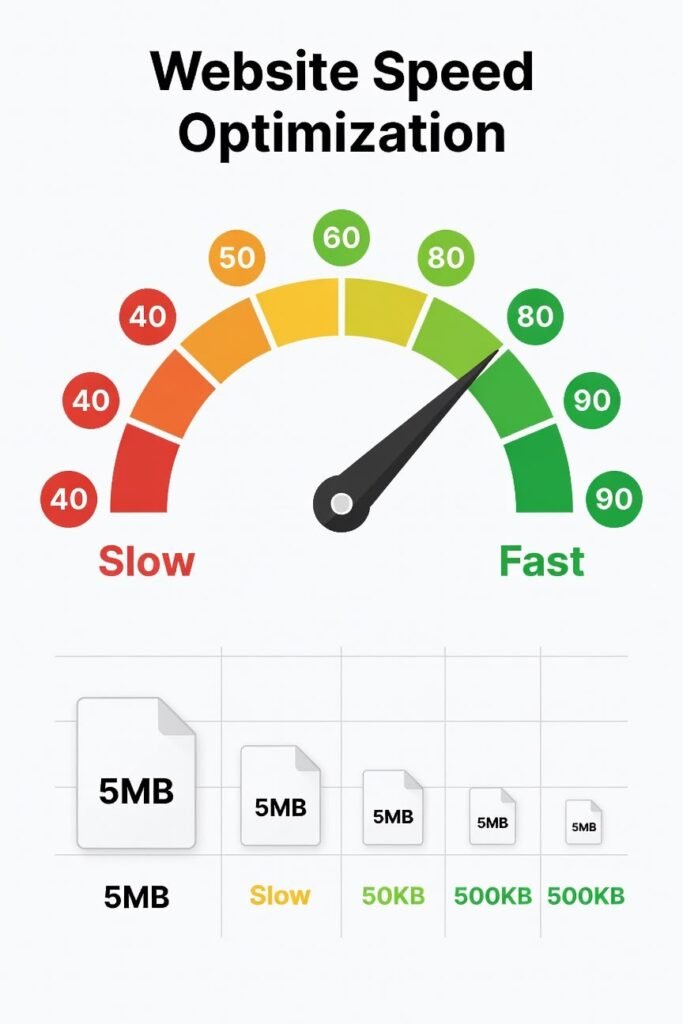
If your website takes too long to load, people leave before it even finishes opening. Google notices this too, and it can lower your ranking. Try to keep your images small and your site fast and light.
2. Ignoring Search Intent
One of the biggest SEO mistakes is creating content without understanding what users are actually searching for. Google aims to provide the most relevant answers to user queries.
For example, if someone searches for “best SEO agency in Delhi,” they expect a list of agencies or service information—not a general article about SEO.
How to Fix It
- Create content that directly answers users’ questions.
- Research user intent before writing.
- Match your content with informational, commercial, or transactional searches.
2. Keyword Stuffing
Years ago, repeating the same keyword dozens of times could improve rankings. Today, keyword stuffing can hurt your SEO and make your content difficult to read.
Instead of overusing your focus keyword, write naturally and include related keywords throughout your content.
Best Practice
Include semantic keywords naturally.
Use the focus keyword in:
- Title
- First paragraph
- URL
- One or two headings
- Meta description
3. Publishing Thin Content
Google prioritizes comprehensive, valuable content that satisfies user intent. Short articles with little useful information often struggle to rank.
Instead of writing a 500-word article, create detailed content that thoroughly explains the topic.
Improve Content Quality By
- Updating content regularly
- Adding examples
- Including step-by-step instructions
- Answering common questions
- Using images and infographics
4. Missing or Poor Meta Titles and Descriptions
Your title tag and meta description are often the first things users see in search results.
A poorly written title can reduce your click-through rate, even if your page ranks well.
Tips
- Make the title compelling.
- Keep titles under 60 characters.
- Keep meta descriptions under 160 characters.
- Include your primary keyword.
5. Slow Website Speed
Website speed is a confirmed Google ranking factor. Slow websites frustrate visitors, increase bounce rates, and reduce conversions.
Ways to Improve Speed
Improve Core Web Vitals
- Compress images
- Use WebP image format
- Enable browser caching
- Minify CSS and JavaScript
- Use a Content Delivery Network (CDN)
6. Poor Mobile Optimization
Most users browse websites on mobile devices, and Google primarily uses mobile-first indexing.
If your website isn’t responsive or easy to use on smartphones, your rankings may suffer.
Ensure Your Website
- Avoids horizontal scrolling
- Loads quickly on mobile
- Uses responsive design
- Has readable text
- Includes clickable buttons
- Avoids horizontal scrolling
7. Weak Internal Linking
Internal links help search engines understand your website structure and distribute authority between pages.
Without proper internal linking, important pages may not rank as well as they could.
Best Practices
- Avoid excessive links on a single page.
- Link to related blog posts.
- Link to relevant service pages.
- Use descriptive anchor text.
9. Ignoring Local SEO
If you run a local business, don’t skip your Google Business Profile. Without it, or with incomplete information, you may not show up when people nearby search for what you offer.
8. Ignoring Technical SEO
Even great content won’t perform well if search engines can’t crawl and index your website properly.
Technical SEO ensures your site is accessible, secure, and optimized for search engines.
Check Regularly
- Crawl errors in Google Search Console
- XML sitemap
- Robots.txt
- HTTPS
- Canonical tags
- Structured data (Schema Markup)
9. Not Updating Old Content
SEO isn’t a one-time task. Search trends, algorithms, and user expectations change over time.
Updating old blog posts with fresh information helps maintain rankings and improves user engagement.
Update Existing Content By
- Adding recent statistics
- Refreshing outdated information
- Improving headings
- Including new internal links
- Expanding thin sections
10. Ignoring User Experience (UX)
Google values websites that provide a positive user experience. A confusing layout, intrusive pop-ups, or poor navigation can increase bounce rates and reduce rankings.
Improve UX By
- Using clear navigation
- Writing short paragraphs
- Adding headings and bullet points
- Including relevant images
- Making CTAs easy to find
- Ensuring fast loading times
Quick SEO Checklist
Before publishing any page, make sure you have:
✅ No broken links
✅ Optimized title tag
✅ Compelling meta description
✅ Focus keyword in key locations
✅ High-quality, original content
✅ Mobile-friendly design
✅ Fast loading speed
✅ Internal links
✅ Image alt text
✅ Schema markup
Final Thoughts
SEO Mistakes
Avoiding common SEO mistakes is essential for improving your Google rankings and attracting more organic traffic. SEO is an ongoing process that requires regular updates, technical improvements, and valuable content creation.
Focus on creating content that genuinely helps users, optimize your website for speed and mobile devices, and regularly monitor your site’s performance. Over time, these improvements can lead to better rankings, increased visibility, and more qualified leads.
If you’re looking to improve your website’s SEO and generate sustainable business growth, partnering with an experienced digital marketing agency can make a significant difference we are providing the Digital marketing Services like web development, Seo Consultancy , content marketing , google ads etc .